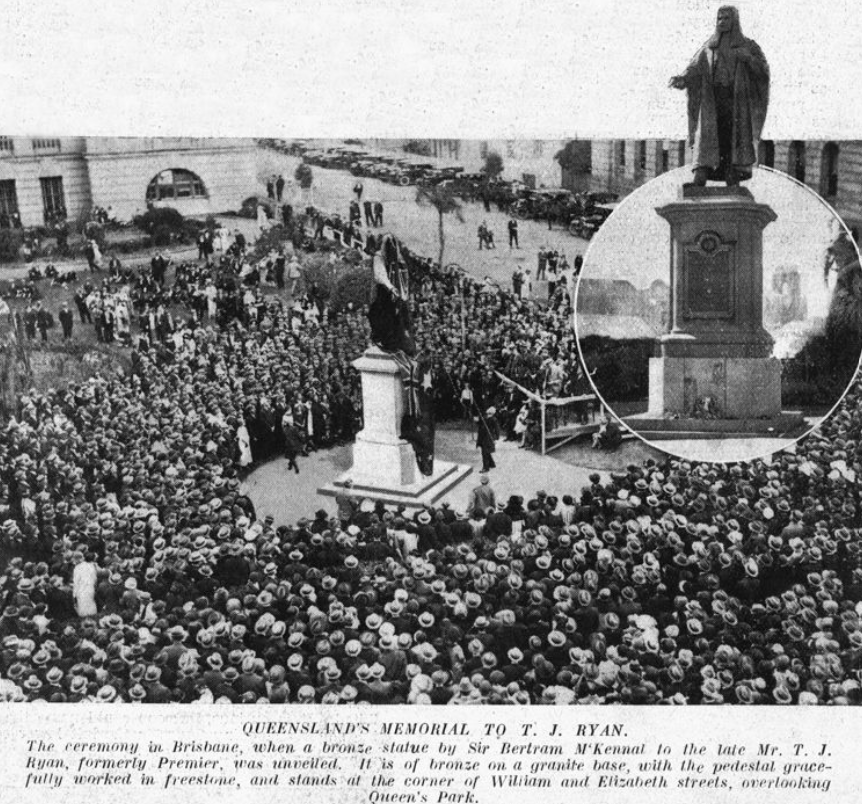
Today is the centenary of the unveiling of the statue to the memory of the late barrister and politician Thomas Joseph (T.J.) Ryan.
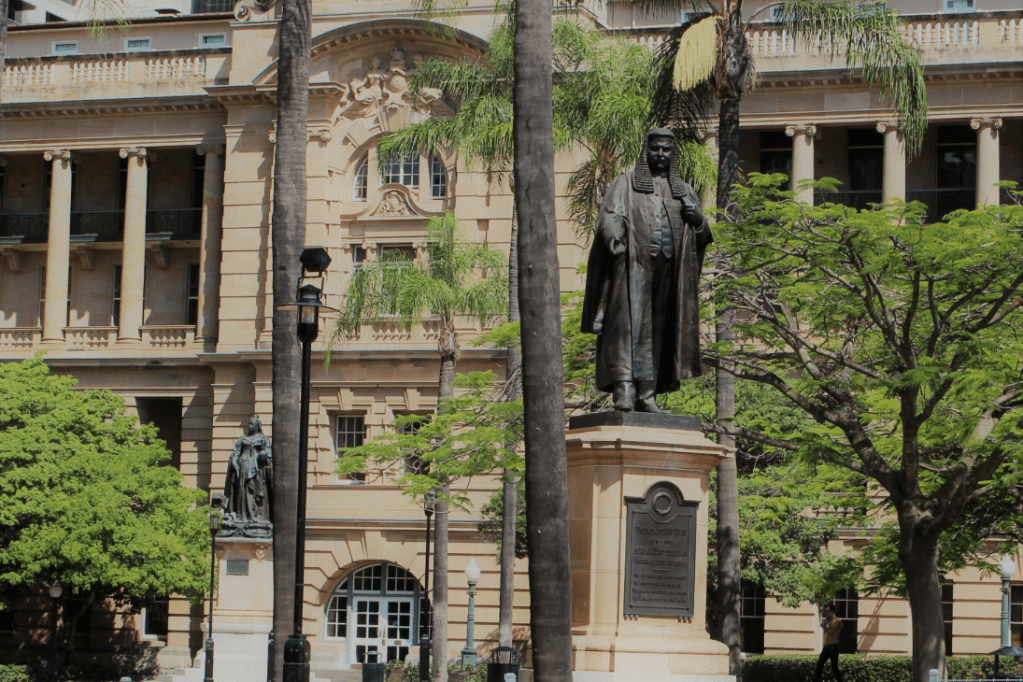
The statue is made of bronze and is three meters tall and depicts Ryan wearing a flowing gown and a full-bottomed wig and looking out over the Brisbane River. However, with his back-facing Queen Victoria’s statue, the position of the statue of one of Queensland’s most revered Labor premiers sparked huge controversy when it was unveiled in Queens Garden, Brisbane on 6 September 1925.
T.J. Ryan was the Labor Premier of Queensland from 1915 to 1919. He was known for major reforms in Labor and industrial relations, particularly promoting and drafting the workers’ compensation bill. As premier, Ryan’s greatest success came in structural reform for sugar growers and laying the groundwork for other farming activities. State enterprises, which provided competition with monopolies, were established including butcher shops, pastoral stations, sawmills, and coal-mines.
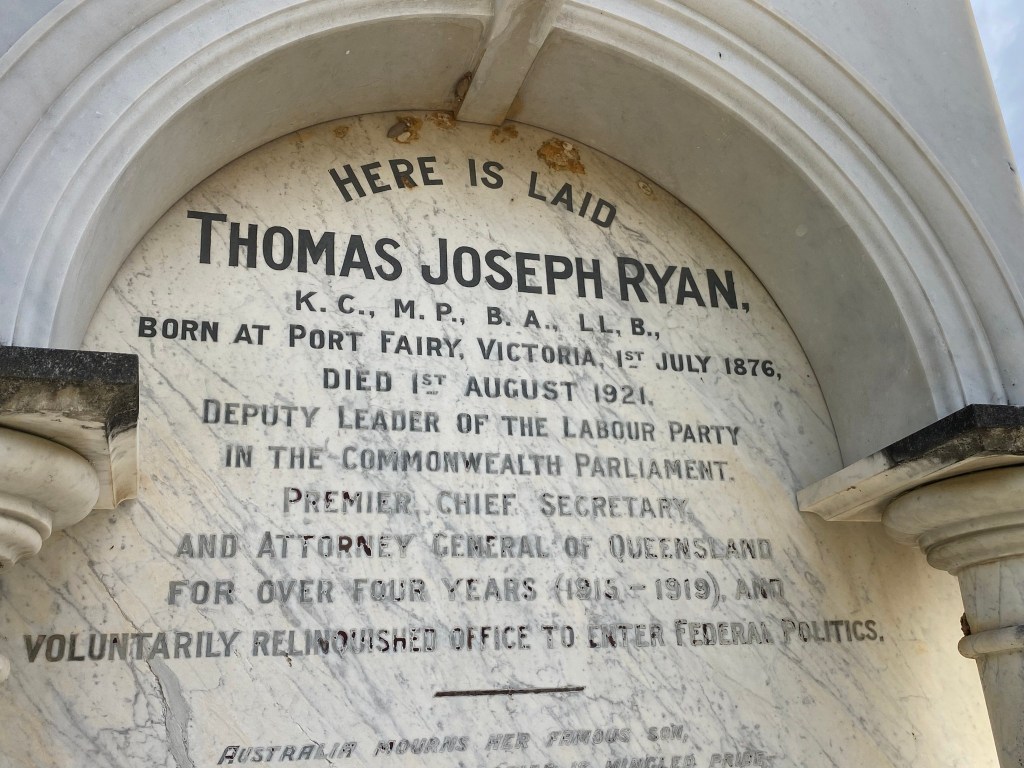
Ryan moved from state to federal politics in October 1919. Unfortunately, during a trip to England he contracted influenza, and on his return never quite fully recovered. On 1 August 1921, he died of pneumonia.

The 1925 statue of T.J. Ryan was funded by public subscription, primarily from the Labor movement and Catholic subscribers. However, his Catholicism, Irish background, Labor politics, and role in the conscription debates earned him the wrath of conservatives, loyalists, and many of the Protestant clergy.
Ryan’s conservative opponents claimed the statue constituted ‘£3000’s worth of insult’ and an ‘affront to the British Constitution’ because its back was turned on Queen Victoria’s statue.
One hundred years later the statue of T.J. Ryan is still standing tall at the front of Queens Garden looking out across the Brisbane River, with his back still towards the British monarchy.
A centenary of looking forward rather than looking back at the diminishing monarchy of the past.
 Stuff I've Written - Dr Glenn A. Davies