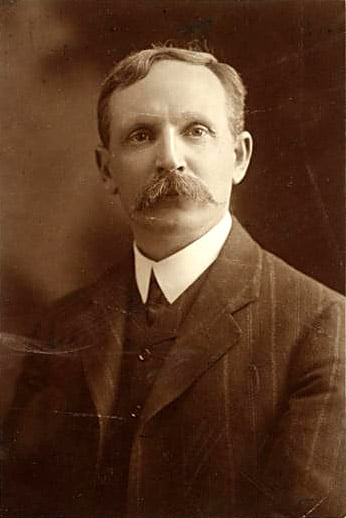
The Charters Towers Labor politician Charles McDonald never lost an election. 100 years ago today, on the day before the 1925 Federal Election Day, he maintained his 30-year winning streak when he died in office.
Charles McDonald was born in North Melbourne, Victoria on 25 August 1860. He moved to Charters Towers in 1888 to start his own business as a watchmaker and jeweller and became involved with the labour movement. Despite watchmakers and jewellers not being occupationally inclined to unionism, he was accepted as an organiser with the local Mining and Accident Association and became secretary of the Land Nationalisation League.
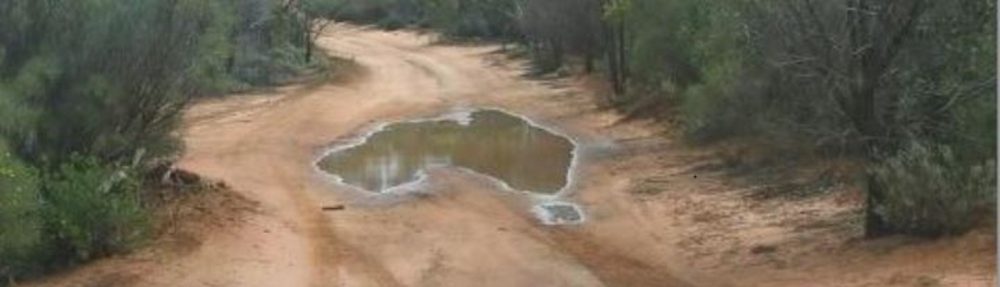
Known as ‘Fighting Charlie’ or “Fighting Mac” for his vigorous political campaigning style, in one campaign, McDonald reportedly rode over 3,000 miles (4,800 km) on bicycle on the rough outback roads of north-western Queensland.
On 1 August 1890, at the First General Congress of the Australian Labour Federation in Brisbane, Charters Towers delegate, Charles McDonald raised the question of the trade union movement involving itself directly in political action and the Australian Labour Party (ALP) was born.
On 11 March 1891, Charters Towers established the second branch of the ALP and continued to play a central role in the early days of Labor’s existence.
In Edmeades Park, Charters Towers is a plaque commemorating the establishment in 1891 of the Charters Towers District Australian Labour Federation.

In 1893, ‘Fighting’ Charlie McDonald was elected as the Labor Member for Flinders in the Queensland legislative assembly, where he became known for his mastery of the Standing Orders.
In 1901, he successfully stood for the federal seat of Kennedy in the House of Representatives at the first federal election and held the seat continuously until his death in 1925.
Charlie McDonald was Chairman of Committees 1906-10 and the first Labor Speaker of the House of Representatives in the Andrew Fisher government from 1910-1913, an office he held again 1914-17. A noted republican, McDonald did not wear the traditional Speaker’s wig and gown and had the ceremonial mace removed from the table of the House of Representatives.
During the 1917 parliamentary term, McDonald split with the Hughes government and went with Labor to the opposition backbench.
Charles McDonald was the last of the first Queensland Labour Party of 1893 to remain in public life. He never lost an election. His death on 13 November 1925, the day before the 1925 federal election, led to his opponent being declared elected unopposed – which could be declared not a lost election. Afterwards, his substantial private library was gifted to the Commonwealth Parliamentary Library by his widow.
 Stuff I've Written - Dr Glenn A. Davies