Remembering ‘Fighting Charlie’ McDonald – 100 years on

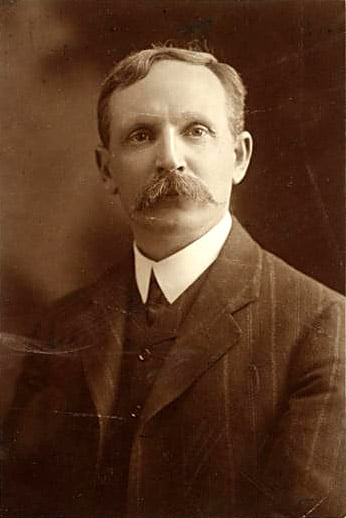
The Charters Towers Labor politician Charles McDonald never lost an election.  100 years ago today, on the day before the 1925 Federal Election Day, he maintained his 30-year winning streak when he died in office.

Charles McDonald was born in North Melbourne, Victoria on 25 August 1860. He moved to Charters Towers in 1888 to start his own business as a watchmaker and jeweller and became involved with the labour movement. Despite watchmakers and jewellers not being occupationally inclined to unionism, he was accepted as an organiser with the local Mining and Accident Association and became secretary of the Land Nationalisation League.

Known as ‘Fighting Charlie’ or “Fighting Mac” for his vigorous political campaigning style, in one campaign, McDonald reportedly rode over 3,000 miles (4,800 km) on bicycle on the rough outback roads of north-western Queensland.

On 1 August 1890, at the First General Congress of the Australian Labour Federation in Brisbane, Charters Towers delegate, Charles McDonald raised the question of the trade union movement involving itself directly in political action and the Australian Labour Party (ALP) was born.

On 11 March 1891, Charters Towers established the second branch of the ALP and continued to play a central role in the early days of Labor’s existence.

In Edmeades Park, Charters Towers is a plaque commemorating the establishment in 1891 of the Charters Towers District Australian Labour Federation.

In 1893, ‘Fighting’ Charlie McDonald was elected as the Labor Member for Flinders in the Queensland legislative assembly, where he became known for his mastery of the Standing Orders.

In 1901, he successfully stood for the federal seat of Kennedy in the House of Representatives at the first federal election and held the seat continuously until his death in 1925.

Charlie McDonald was Chairman of Committees 1906-10 and the first Labor Speaker of the House of Representatives in the Andrew Fisher government from 1910-1913, an office he held again 1914-17. A noted republican, McDonald did not wear the traditional Speaker’s wig and gown and had the ceremonial mace removed from the table of the House of Representatives.

During the 1917 parliamentary term, McDonald split with the Hughes government and went with Labor to the opposition backbench.

Charles McDonald was the last of the first Queensland Labour Party of 1893 to remain in public life. He never lost an election. His death on 13 November 1925, the day before the 1925 federal election, led to his opponent being declared elected unopposed – which could be declared not a lost election. Afterwards, his substantial private library was gifted to the Commonwealth Parliamentary Library by his widow.

The Hemline that Stopped a Nation

60 years ago, on 30 October 1965, a hemline stopped the nation. In her jaw-dropping Melbourne Cup Carnival outfit debut, model Jean Shrimpton caused a scandal and turned Australia on its head.

It was the week before the 1965 Melbourne Cup Carnival and the fashionable crowd at Flemington for Victoria Derby Day were waiting to see what “the most beautiful girl in the world” would wear for her Melbourne Cup Carnival debut.

When the 22-year-old ‘It’ girl arrived, the crowd fell silent. Bare-legged and fresh-faced, she was wearing none of the mandatory accessories for the members’ enclosure – her hat, gloves, and stockings were missing. Even more shocking, her dress finished 12cm above her knees.

Following her appearance, the front page of The Sun newspaper raged:

There she was, the world’s highest-paid fashion model, snubbing the iron-class convention of fashionable Flemington with a dress five inches above the knee – NO hat, NO gloves and NO stockings!

Derby Day racegoers were horrified.

The press clamoured for photos and, within days, the story of the model in the mini had ignited global controversy.

To this day, many believe Shrimpton’s attendance at Flemington Racecourse to be Australia’s biggest fashion scandal. But more importantly, the British model heralded the arrival of the Swinging Sixties in Australia.

Her race-day outfit paved the way for Australian women to embrace bolder, less conservative fashion and the progressive cultural attitudes the decade embodied.

Within days of her appearance, hemlines were on the rise.

The miniskirt was born.  

Centenary of controversial unveiling of T.J. Ryan statue

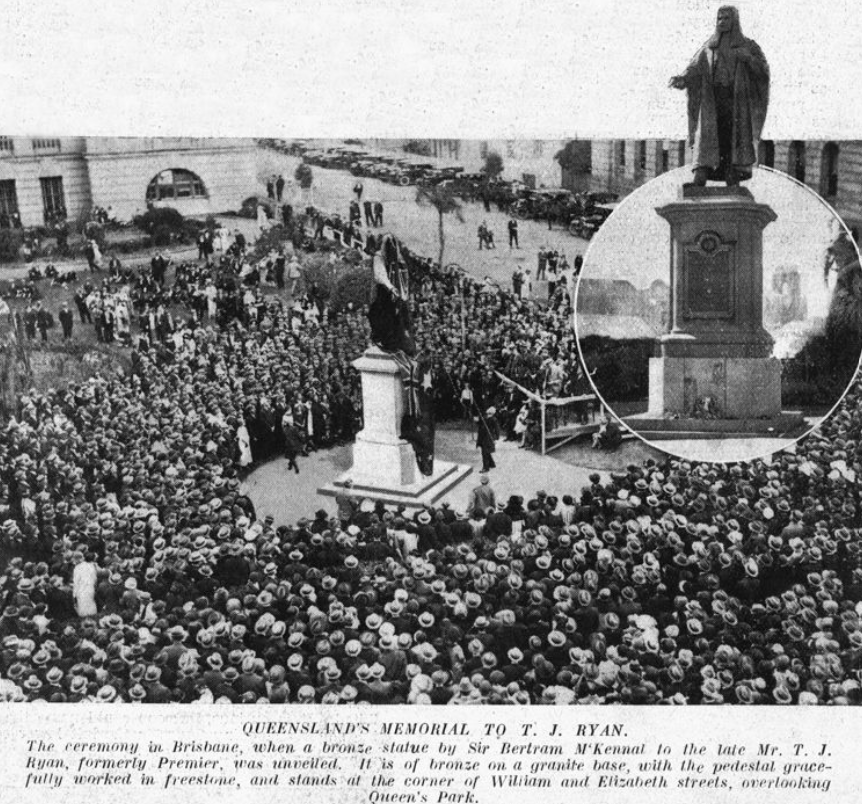
Today is the centenary of the unveiling of the statue to the memory of the late barrister and politician Thomas Joseph (T.J.) Ryan.

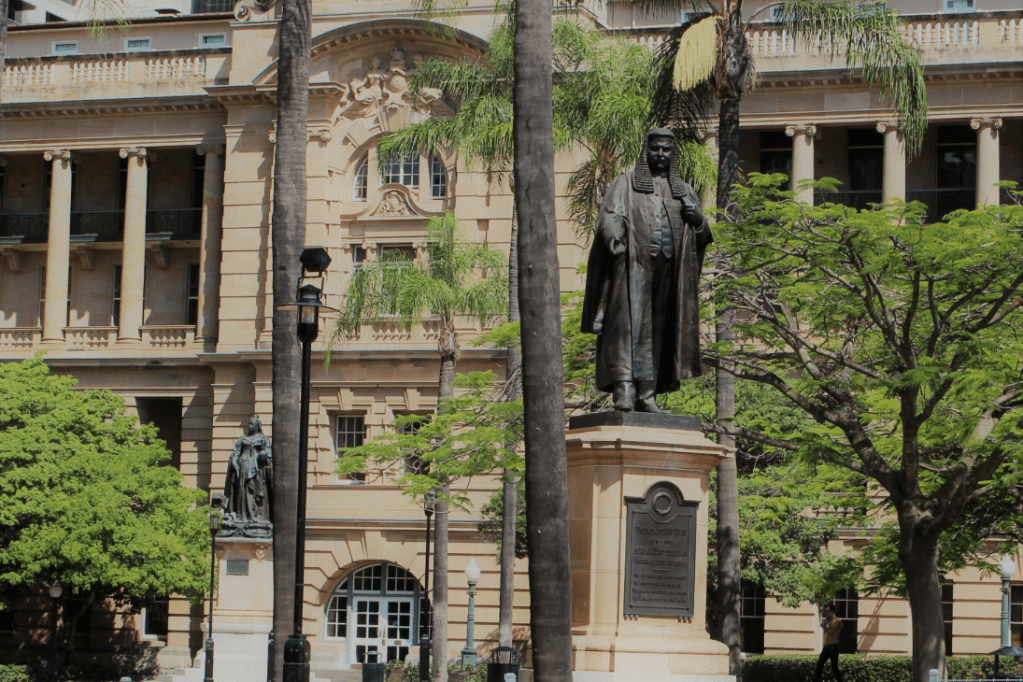
The statue is made of bronze and is three meters tall and depicts Ryan wearing a flowing gown and a full-bottomed wig and looking out over the Brisbane River. However, with his back-facing Queen Victoria’s statue, the position of the statue of one of Queensland’s most revered Labor premiers sparked huge controversy when it was unveiled in Queens Garden, Brisbane on 6 September 1925.

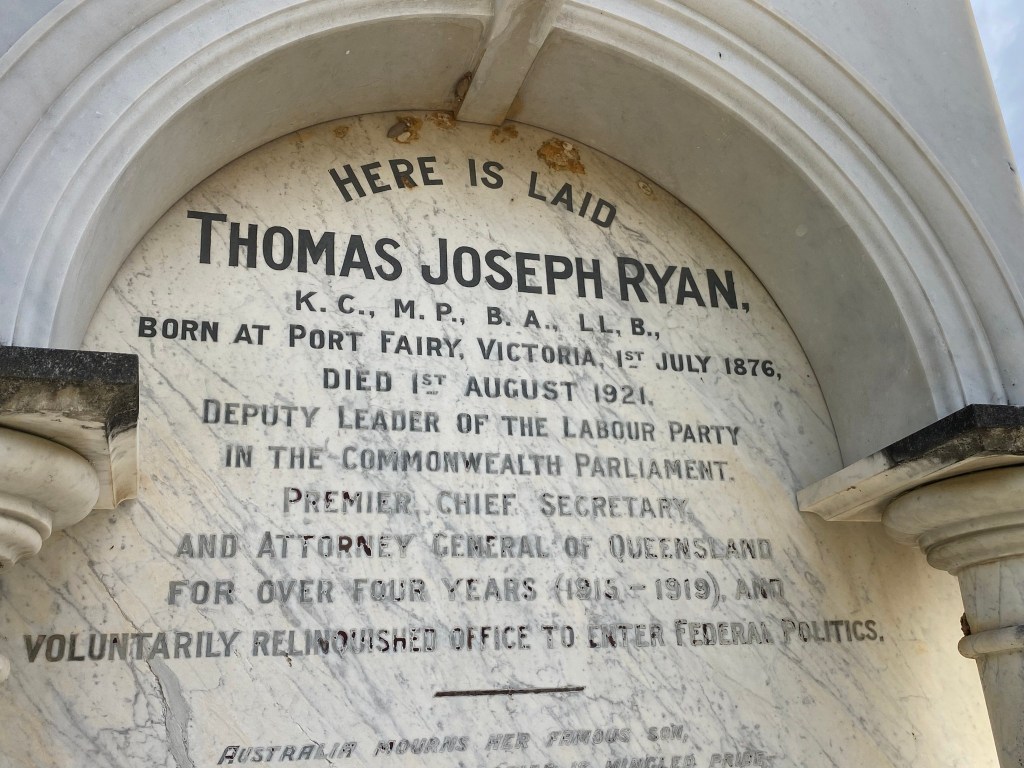
T.J. Ryan was the Labor Premier of Queensland from 1915 to 1919. He was known for major reforms in Labor and industrial relations, particularly promoting and drafting the workers’ compensation bill. As premier, Ryan’s greatest success came in structural reform for sugar growers and laying the groundwork for other farming activities. State enterprises, which provided competition with monopolies, were established including butcher shops, pastoral stations, sawmills, and coal-mines.

Ryan moved from state to federal politics in October 1919. Unfortunately, during a trip to England he contracted influenza, and on his return never quite fully recovered. On 1 August 1921, he died of pneumonia.

The 1925 statue of T.J. Ryan was funded by public subscription, primarily from the Labor movement and Catholic subscribers. However, his Catholicism, Irish background, Labor politics, and role in the conscription debates earned him the wrath of conservatives, loyalists, and many of the Protestant clergy.

Ryan’s conservative opponents claimed the statue constituted ‘£3000’s worth of insult’ and an ‘affront to the British Constitution’ because its back was turned on Queen Victoria’s statue.

One hundred years later the statue of T.J. Ryan is still standing tall at the front of Queens Garden looking out across the Brisbane River, with his back still towards the British monarchy.

A centenary of looking forward rather than looking back at the diminishing monarchy of the past.

1919 Townsville Armistice Day Procession

At 11:00am on Monday 11 November 1918, hostilities in Europe ceased after the Germans and Allies signed an armistice declaring Germany’s surrender. In Australia, the news was greeted by a spontaneous outburst of emotion, and across the land a collective cheer has been followed by a sigh of relief. The Great War is over. Tens of thousands of people have taken to the streets in joyous celebration for the end of a war that has wreaked terrible tragedy on the people and the economy.

(Images are from the Townsville City Council libraries)

Palm Sunday, 1985 – 40 years on

Opposition Leader Peter Dutton’s nuclear energy solution to meet future energy needs appears to be struggling to get traction during the current federal election campaign. Although the success of the 1980s anti-nuclear movement appears to have faded and become part of the historical record, the spirit of the 1985 Palm Sunday protest march is still alive in Australia, writes history editor Dr Glenn Davies.

In 2025, Palm Sunday will occur on 13 April 2025. Palm Sunday, the Sunday before Easter, is a traditional day of protest for peace.

Australia has a long history to resisting uranium mining and nuclear development. During the 1980s, Palm Sundays in Australia were the occasions for enormous anti-nuclear rallies all across the country reaching a peak in 1985.

On 19 June 2024, Peter Dutton announced that “nuclear energy for Australia is an idea whose time has come.” At the same time he released

the seven locations, located at a power station that has closed or is scheduled to close, where we propose to build zero-emissions nuclear power plants.”

Nothing announced by Peter Dutton today changes the fact that nuclear energy is, according to reams of expert analysis, economically unfeasible in Australia. This is as true today as it was in the 1970s and 1980s.

The Palm Sunday peace march is an annual ecumenical event that draws people from many faith backgrounds to march for nonviolent approaches to contentious public policies. The event is based on the account of Jesus’ procession into Jerusalem which some see as an anti-imperial protest, a demonstration designed to mock the obscene pomp of the Roman empire. Palm Sunday is now considered an opportunity to join together to demonstrate for peace and social justice.

A major focus of activism in Australia during the anti-nuclear movement in the 1980s was the campaign against uranium mining, as Australia holds the world’s largest reserves of this mineral.

The Australian anti-nuclear movement emerged in the late 1970s in opposition to uranium mining, nuclear proliferation, the presence of U.S. bases and French atomic testing in the Pacific.

During the 1980s, Palm Sundays in Australia were the occasions for enormous anti-nuclear rallies all across the country.

The annual Palm Sunday rallies were organised by the People for Nuclear Disarmament (P.N.D.), beginning in 1982 and reaching a peak in 1985. On Palm Sunday in 1982, an estimated 100,000 Australians participated in anti-nuclear rallies in the nation’s biggest cities. These rallies grew year by year.

On Palm Sunday 1982, which fell on April 4th, more than 40 000 people marched in Melbourne to call for nuclear disarmament and highlight the multiple dangers associated with uranium mining and nuclear power. They were joined by a similar sized rally in Sydney. During the same week 5000 marched in Brisbane while numerous other protests were held across Australia.

1984 was the year of George Orwell’s dystopian future — though the 1980s were less about a surveillance society than nuclear fear. In 1984, Labor introduced the three-mine policy as a result of heavy pressure from anti-nuclear groups. This was also a time when many Australians were concerned that the secret defence bases at Pine Gap, North West Cape and Nurrungar, run jointly with the United States on Australian soil, were “high priority” nuclear targets.

An estimated 250,000 people took part in Palm Sunday peace marches in April 1984 and the Nuclear Disarmament Party gained seven per cent of the vote in the December 1984 election and won a Senate seat. In addition, the election of the Lange Labor Party Government in New Zealand in July 1984 resulted in New Zealand banning visits by ships that might be carrying nuclear weapons.

Australia did not follow the example of New Zealand and refused entry to any ship that carried nuclear weapons, which were also considered targets in a nuclear war. The refusal of New Zealand to permit a visit by the USS Buchanan in February 1985 threatened the future of the ANZUS alliance.

In 1985, more than 350,000 people marched across Australia in Palm Sunday anti-nuclear rallies demanding an end to Australia’s uranium mining and exports, abolishing nuclear weapons and creating a nuclear-free zone across the Pacific region. The biggest rally was in Sydney, where 170,000 people brought the city to a standstill.

In 1985, I was a first year James Cook University student living at University Hall. JCU students in Townsville supported the massive Palm Sunday rallies by our southern cousins in public protest by tagging on the end of the May Day (Labour Day) 1985 march along The Strand.

As we marched behind the Townsville unionists with their hats and placards remembering and publicly affirming the sacrifices their forebears had made – the mateship, the loyalty and the determination to build and protect the freedom and rights we now enjoy – we realised this march was about empowerment in a world where individuals still too often have little control over their own destiny when it comes to the workplace. And this was the lesson we young students learned on that day from our older working brothers as we also were desperately looking for more say in the safety of our world.

May is a beautiful time of the year in Townsville, with breezy, high-skied blue days. Marching along The Strand in Townsville we were proclaiming our concerns for ensuring a better and safer world for all our futures. It would be irresponsible for us not to chant:

2, 4, 6, 8. We don’t want to radiate”.

1, 2, 3, 4. We don’t want no nuclear war”.

By the late 1980s, the political, social and economic mood had swung firmly in favour of the anti-nuclear movement. Though it was clear that the three already functioning mines would not be shut down, the falling price of uranium, coupled with the 1986 Chernobyl disaster, ensured that there would not be a strong effort to broaden Australia’s nuclear program.

During the 1980s, there was a mushroom cloud shadow cast over Australia. The protests of the anti-nuclear movement was successful in linking the horror of nuclear war to the zeitgeist of the 1980s. The anti-nuclear movement served an important function in Australian politics where it visibly prevented any more pro-nuclear policies from being enacted by the Australian Government.

Peter Garrett is a former Labor minister for the environment, the lead singer of rock-band Midnight Oil, and has been a prominent nuclear disarmament activist since the 1980s. He recently stated in a Sydney Morning Herald Op-Ed:

Younger voters understandably won’t know that a generation their age once packed the Sidney Myer Music Bowl with Midnight Oil, INXS and other friends to “Stop the Drop”. They won’t remember our Nuclear Disarmament Party campaign, which won Senate seats in Western Australia and NSW in the ’80s. They can’t know what it was like to grow up during the Cold War era or live through horrific meltdowns at the Three Mile Island, Chernobyl and Fukushima nuclear power plants, which were also “completely safe” until the day that they weren’t. But generations Y and Z can still smell a rotten idea when they give it a good sniff.”

The use of nuclear energy as a solution to Australia’s future energy needs is still a hard sell.

Times have obviously changed since the 1970s, but significant political and economic barriers remain – and the problem of cost is still unsolved. This is compounded by apocalyptic visions of global destruction as part of our contemporary zeitgeist. It’s just that in its modern incarnation, the apocalypse has become more varied.

Gone is the single event; now we have a multiple-choice-question-sheet worth of ways to end our time on Earth. In the 2020s, the apocalypse continues to figure heavily in social life with constant references to wild weather, global financial crises, lone wolf terrorism, environmental collapse and zombie plagues.

And perhaps the greatest fear of all is that in this fracturing of fear may come complacency.

For Opposition Leader Peter Dutton he will continue to struggle to get traction, not only during the current federal election campaign but as long as the spirit of the 1985 Palm Sunday protest march lives.

Commonwealth Day and the sound of crickets

So, a few days ago, was Commonwealth Day. Monday, 10/3/2025 was meant to be a day of observance for the approximately one billion people of the 56 member countries of the Commonwealth of Nations. However, the only activity connected to Commonwealth Day appears to be the British royal family attending a church service in a different hemisphere on the other side of the world.

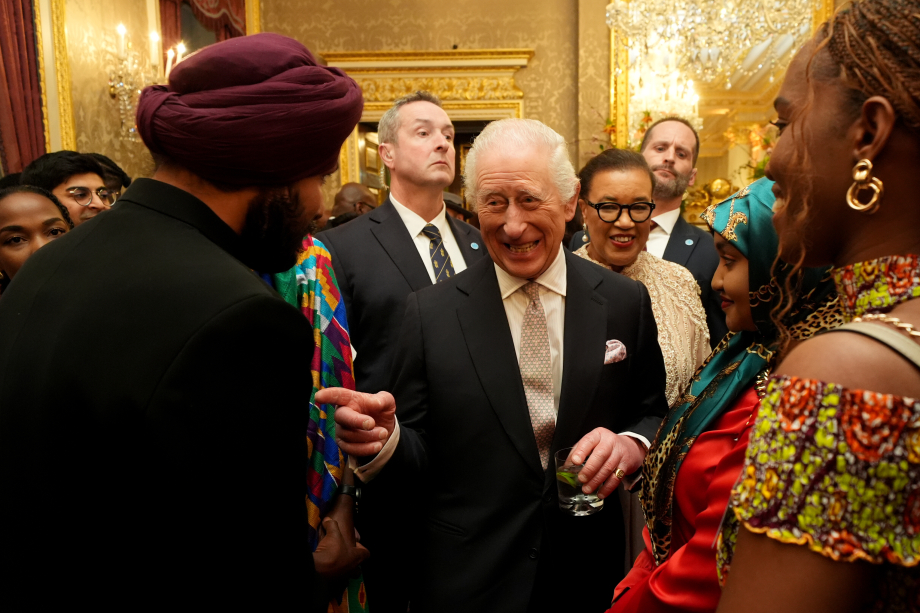
Commonwealth Day Reception at Marlborough House, the home of the Commonwealth Secretariat.

The 2020 Commonwealth Day Service was famously the last official public event for Prince Harry before leaving Britain for North America to take his journey towards his desired financial independence.

Prince Harry and Meghan, Duchess of Sussex attend the Commonwealth Day Service at Westminster Abbey on March 9, 2020 in London.

In Australia, there were public holidays on 10 March 2025 that coincided with Commonwealth Day, such as Canberra Day in the A.C.T., Labour Day in Victoria, Adelaide Cup Day in South Australia and Eight-hour Day in Tasmania. Yet nowhere in any Australian media though did there appear any discussion on Commonwealth Day. Cue sound of crickets chirping.

In Australia the only reference to 2025 Commonwealth Day seemed to be an announcement from the Department of the Prime Minister and Cabinet for all Australian government departments and associated portfolio agencies to fly or display the Australian National Flag all day. That’s it!

Reminds me of the total lack of celebrations in Australia for the Queen’s 2012 Diamond Jubilee (and Platinum Jubilee!).

All this makes a mockery of the Commonwealth Secretariat establishing as this year’s theme ‘Together We Thrive”.

Australia’s lack of interest in Commonwealth Day is a clear reflection of our desire to break from the royals and stand on our own two feet – by becoming a republic.

100 years ago silent era Hollywood actress from Charters Towers went ‘1920s viral’

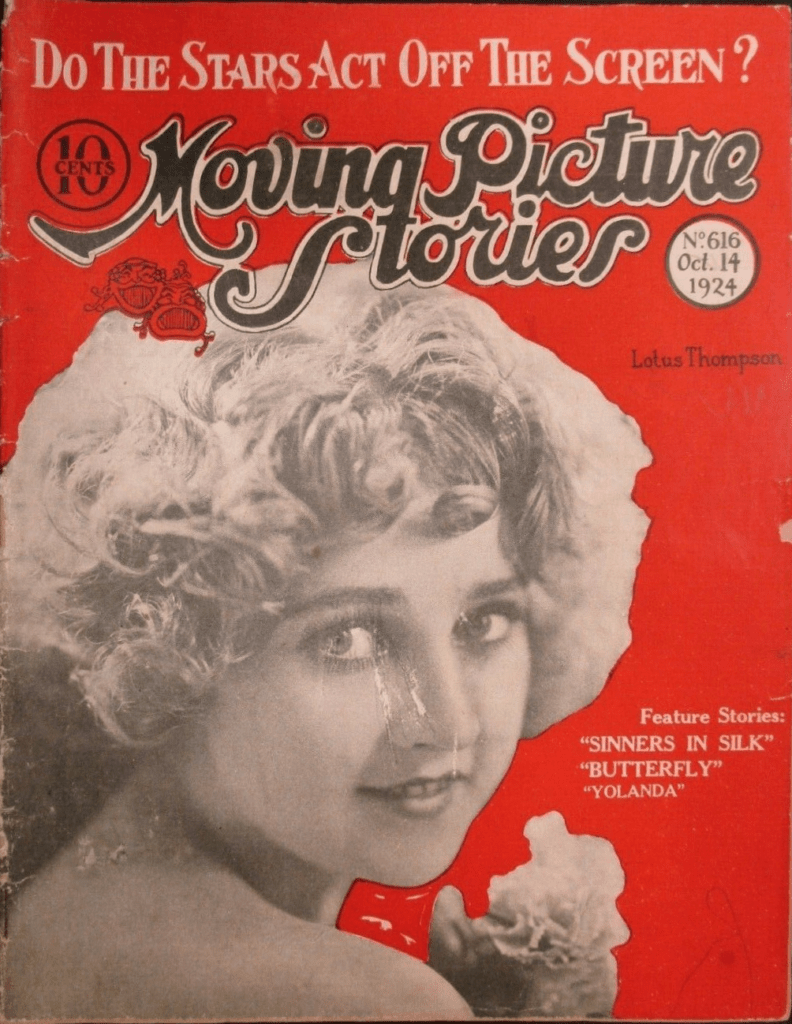
100 years ago today, on 1 February 1925, a beautiful young Australian actress from Charters Towers made such a splash in Hollywood, she went ‘1920s viral’ all over the world. Today is the centenary of the Charters Towers-born Lotus May Thompson attempting to throw acid on her legs.

Lotus May Thompson was born in Charters Towers on 26 August 1904, to Archie Thompson and Sarah fellow. She was to have a younger brother, Eric. During the 1890s, her father Archie and his brother Bert worked in the gold mines of north Queensland. In Charters Towers they were to establish ‘Thompson Brothers Mining Company’ and were active in the town, helping to establish the first School of Arts.

In the late nineteenth century and early twentieth century Charters Towers was certainly well-known as a gold mining town, with daily calls on its Stock Exchange. However, it was also a very creative community. In 1895, the Edison kinetophone made its first Australian appearance in Charters Towers. A combination of the Edison kinetoscope and the phonograph Edison had invented, it synchronised images with sound delivered to an earpiece from a wax cylinder.

Charters Towers had a multitude of creative people. There were Welsh choirs, a number of champion brass bands, and in 1909 even Dame Nellie Melba came to Charters Towers to sing at the Royal Theatre as part of her back-block tours. Charters Towers was to even produce a silent era genuine Hollywood star.

In their early years, Lotus and her brother, Eric, lived at ‘The Defiance Hotel’ in Charters Towers, where their mother worked. As a child, the young Lotus showed talent in school and church theatricals. The family moved to Sydney where she began her career in vaudeville at 13, graduating to full-length feature films by 16.

In 1919, when she was fifteen, Lotus’ admirers entered her in a beauty contest where she was awarded first prize by a unanimous vote of the judges. One of the judges was a young artist. When asked his reason for selecting her he remarked that he chose her not so much for the beauty of her eyes, head, or lovely complexion. Instead, he admired her legs most, as they were “the sort of limbs a Diana or Venus must have had at her age”. The contest won for her the title “the most beautiful girl in Australia”.

Lotus had a fantastic start in Australia as an actress, making her film debut in the 1921 drama Know Thy Child. The Sunday Times, 1 April 1923, p.17 described Miss Thompson as “18 years of age and a blonde of distinctive beauty.”

Over the next four years she starred in eight silent films. being directed at one stage by the greatest Australian film director at the time, Raymond Longford.  

On 5 March 1924, Lotus moved to Los Angeles to break into American pictures. She sailed for California on the Matson liner Ventura, with her mother Sarah. The beautiful blonde actress started working as an extra at Hal Roach studios, Hollywood. She spent most of her time posing for sexy photos and became known for having ‘the best legs in Hollywood’. Her legs typecast her as a ditzy blonde in light comedies and worked as a ‘pinch hitter’ or body double.

This would not do for Lotus, who left for Hollywood to do ‘deep drama’. She felt powerless and this infuriated the eccentric actress who cooked up a scheme to show the world her talents.

On 1 February 1925, in an effort to disfigure herself, Lotus poured acid on her legs hoping to scar them ‘beyond recovery’ and was promptly rushed to hospital by ambulance. She claimed she did it to be taken more seriously as an actress.

I’ll go mad if they don’t stop it!” she reportedly wailed to her mother. “I know I can play parts, but they won’t give me a chance. It’s legs – always legs! I hate them!

The story about Lotus May Thompson’s disfigured legs made headlines all over the country and went viral worldwide. She told reporters:

It’s sickening. I wish I never had any legs. I couldn’t stand it anymore so I decided to mar them so no one would want to look at them anymore.”

The newspapers were all over it, and articles were published all around the world. It didn’t end there — they called her ‘Acid Girl’, questioned her sanity, mocked her ambitions, and there were follow-up in-depth press interviews that finally aroused the interest of directors as well as attention and offers of work from heartthrob actor, Rudolph Valentino.

Eight years later, on a return to Australia, Lotus told the truth. It was entirely a publicity stunt, she confirmed – and her legs underneath the bandages weren’t at all injured. She claimed she pretended to do it to be taken more seriously as an actress.

Lotus May Thompson had a successful career as a silent movie actress although unfortunately many haven’t survived. Her last credited film was in Cecil B. DeMille’s saucy 1930 ‘Madame Satan’, that apparently became her nickname within the media from then onwards.

Throughout the 1930s and 1940s, Lotus was among a group of other ‘former greats’ who accepted $10-$15/day for uncredited roles in some of the great films of the era. Apparently, these actors were encouraged by the movie industry to accept small roles as it was noted that they always did their assignments well and kept the movie ball rolling. It would have been galling though for previous silent screen stars, such as Lotus, who would have been 30 years old in 1935 to now be backing scenery for a ‘talkie’ actor with less experience.

Lotus May Thompson was married twice. Her first marriage was to Edward Churchill, whom she married in 1929. The marriage ended in divorce in 1936, and she remarried the following year to Stanley Robinson. Neither of the marriages produced children.

Even though her film career was never to translate successfully to leading ‘talkies’ lady, by the time it ended in California in 1949, she had appeared in 35 motion pictures.

However, Lotus May Thompson is mainly remembered for her actions on 1 February 1925 when she claimed she had poured acid on her legs in an effort to disfigure herself.

She died in Burbank, California on 19 May 1963, aged 56 years.

Abbott’s Knightmare ‘Captain’s Pick’ – 10 years on

It was 10 years ago today then Prime Minister Tony Abbott used the Australia Day’s honour list to award Prince Philip with a resurrected Australian knighthood.

Editorials of newspapers across the country on 26 January 2015 slammed Prime Minister Abbott’s bizarre decision to hand Prince Philip a Knighthood, an imperial bauble, labelling the move “ludicrous” and “flabbergasting”.

On 27 March 2014, Prime Minister Tony Abbott, the former director of Australians for a Constitutional Monarchy, announced the return of imperial honours for Australians.

At the time, the PM said he believed this was: “… an important grace note in our national life.”

Tony Abbott’s ‘Captain’s Pick’ of Prince Philip for an Australian Knighthood on the day we should be celebrating Australia’s national identity resulted in the people of Australia being dragged by our elected leader into a cultural cringe so remarkable that it was almost beyond comprehension.

Abbott’s ‘Captain’s Pick’ of Prince Philip for a knighthood was to become a ‘Knightmare’ that has never been repeated since.

There’s no place for any Downton Abbey play acting in Australia. Aristocratic titles and imperial baubles have no place here. They belong over 9000 kms away on the other side of the world with the North and the Past. 

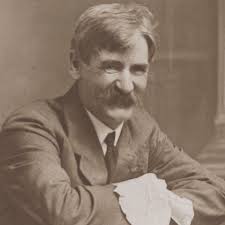
Henry Lawson wrote true in his 1887 ‘A Song of the Republic’:  

Henry Lawson

Sons of the South, awake! arise!
       Sons of the South, and do.
Banish from under your bonny skies
Those old-world errors and wrongs and lies.
Making a hell in a Paradise
       That belongs to your sons and you.

Sons of the South, make choice between
       (Sons of the South, choose true),
The Land of Morn and the Land of E’en,
The Old Dead Tree and the Young Tree Green,
The Land that belongs to the lord and the Queen,
  And the Land that belongs to you.

Sons of the South, your time will come —
       Sons of the South, ’tis near —
The “Signs of the Times”, in their language dumb,
Foretell it, and ominous whispers hum
Like sullen sounds of a distant drum,
       In the ominous atmosphere.

Sons of the South, aroused at last!
       Sons of the South are few!
But your ranks grow longer and deeper fast,
And ye shall swell to an army vast,
And free from the wrongs of the North and Past
       The land that belongs to you.

Thankfully, for the past 10 years, it has been Goodnight to knights and dames.

The Bushwackers – Republic Day

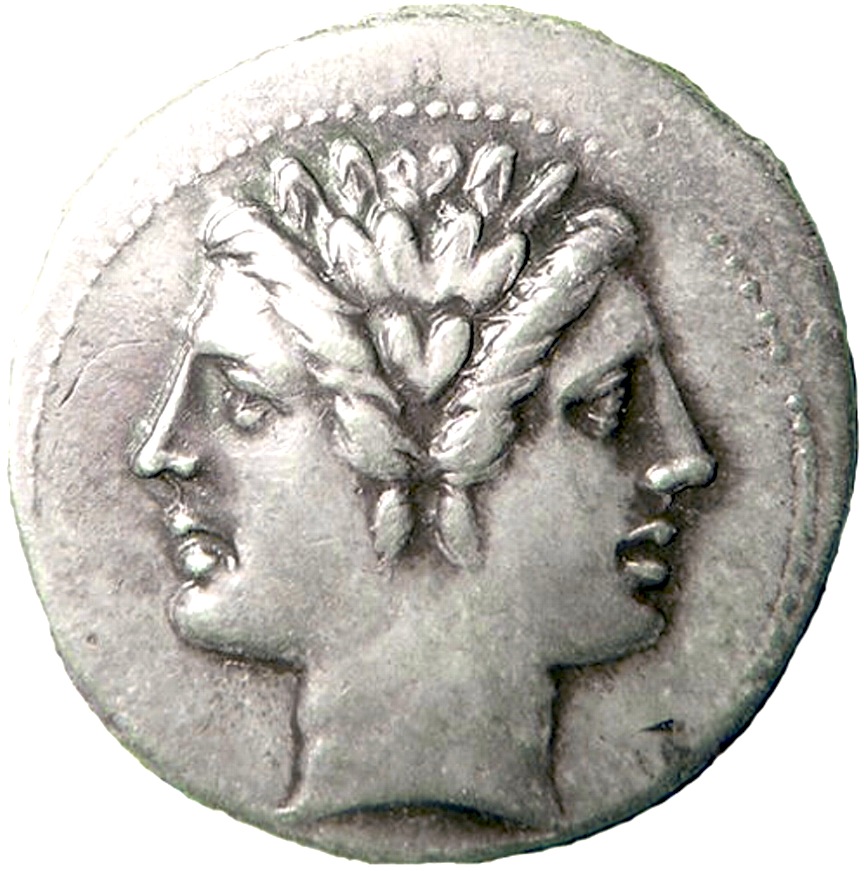
Janus – the god with two faces

The first day of January can be a time of regret and reflection mixed with hope and optimism for the future. This January ritual of looking forward and backward is fitting for the first day of a month named after Janus, the Roman god of beginnings and endings.

In ancient Roman religion and mythology, Janus was the god of gates and doorways, as well as beginnings, transitions, time, duality, passages, frames, and endings.

Janus held the key to the metaphorical doors or gateways as we transition from what was and into what is to come.

Janus had two faces so that he wouldn’t get a kink in his neck from constantly looking forward and backwards.

The ancient Roman poet Ovid wrote in his Fasti about Roman Festivals. These are ten things ancient Romans might have done on the first of January.

1. try to think good thoughts all day long
2. greet each other cheerfully, avoid gossip or negative speech
3. sprinkle saffron on the hearth, as incense
4. sacrifice to Janus before any other god in household shrine
5. join or watch a procession to the Capitoline hill, where
6. priest would sacrifice a heifer and
7. swear in the officials elected to serve in that year
8. do a bit of business
9. give honey, dates, coins to friends, family, patrons, clients
10. pray to the god Janus for peace  

It’d be neat as history teachers if we also could have two faces so that we can always be looking both forwards and backwards without getting a sore neck.