Remembering ‘Fighting Charlie’ McDonald – 100 years on

The Charters Towers Labor politician Charles McDonald never lost an election.  100 years ago today, on the day before the 1925 Federal Election Day, he maintained his 30-year winning streak when he died in office.

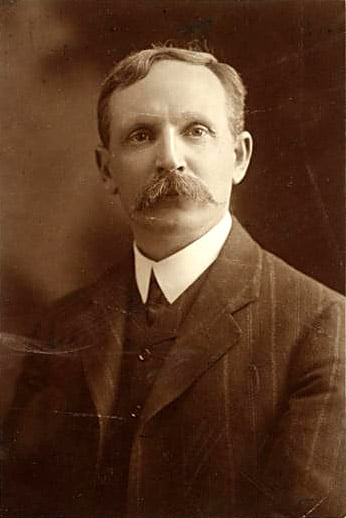
Charles McDonald was born in North Melbourne, Victoria on 25 August 1860. He moved to Charters Towers in 1888 to start his own business as a watchmaker and jeweller and became involved with the labour movement. Despite watchmakers and jewellers not being occupationally inclined to unionism, he was accepted as an organiser with the local Mining and Accident Association and became secretary of the Land Nationalisation League.

Known as ‘Fighting Charlie’ or “Fighting Mac” for his vigorous political campaigning style, in one campaign, McDonald reportedly rode over 3,000 miles (4,800 km) on bicycle on the rough outback roads of north-western Queensland.

On 1 August 1890, at the First General Congress of the Australian Labour Federation in Brisbane, Charters Towers delegate, Charles McDonald raised the question of the trade union movement involving itself directly in political action and the Australian Labour Party (ALP) was born.

On 11 March 1891, Charters Towers established the second branch of the ALP and continued to play a central role in the early days of Labor’s existence.

In Edmeades Park, Charters Towers is a plaque commemorating the establishment in 1891 of the Charters Towers District Australian Labour Federation.

In 1893, ‘Fighting’ Charlie McDonald was elected as the Labor Member for Flinders in the Queensland legislative assembly, where he became known for his mastery of the Standing Orders.

In 1901, he successfully stood for the federal seat of Kennedy in the House of Representatives at the first federal election and held the seat continuously until his death in 1925.

Charlie McDonald was Chairman of Committees 1906-10 and the first Labor Speaker of the House of Representatives in the Andrew Fisher government from 1910-1913, an office he held again 1914-17. A noted republican, McDonald did not wear the traditional Speaker’s wig and gown and had the ceremonial mace removed from the table of the House of Representatives.

During the 1917 parliamentary term, McDonald split with the Hughes government and went with Labor to the opposition backbench.

Charles McDonald was the last of the first Queensland Labour Party of 1893 to remain in public life. He never lost an election. His death on 13 November 1925, the day before the 1925 federal election, led to his opponent being declared elected unopposed – which could be declared not a lost election. Afterwards, his substantial private library was gifted to the Commonwealth Parliamentary Library by his widow.

Palm Sunday, 1985 – 40 years on

Opposition Leader Peter Dutton’s nuclear energy solution to meet future energy needs appears to be struggling to get traction during the current federal election campaign. Although the success of the 1980s anti-nuclear movement appears to have faded and become part of the historical record, the spirit of the 1985 Palm Sunday protest march is still alive in Australia, writes history editor Dr Glenn Davies.

In 2025, Palm Sunday will occur on 13 April 2025. Palm Sunday, the Sunday before Easter, is a traditional day of protest for peace.

Australia has a long history to resisting uranium mining and nuclear development. During the 1980s, Palm Sundays in Australia were the occasions for enormous anti-nuclear rallies all across the country reaching a peak in 1985.

On 19 June 2024, Peter Dutton announced that “nuclear energy for Australia is an idea whose time has come.” At the same time he released

the seven locations, located at a power station that has closed or is scheduled to close, where we propose to build zero-emissions nuclear power plants.”

Nothing announced by Peter Dutton today changes the fact that nuclear energy is, according to reams of expert analysis, economically unfeasible in Australia. This is as true today as it was in the 1970s and 1980s.

The Palm Sunday peace march is an annual ecumenical event that draws people from many faith backgrounds to march for nonviolent approaches to contentious public policies. The event is based on the account of Jesus’ procession into Jerusalem which some see as an anti-imperial protest, a demonstration designed to mock the obscene pomp of the Roman empire. Palm Sunday is now considered an opportunity to join together to demonstrate for peace and social justice.

A major focus of activism in Australia during the anti-nuclear movement in the 1980s was the campaign against uranium mining, as Australia holds the world’s largest reserves of this mineral.

The Australian anti-nuclear movement emerged in the late 1970s in opposition to uranium mining, nuclear proliferation, the presence of U.S. bases and French atomic testing in the Pacific.

During the 1980s, Palm Sundays in Australia were the occasions for enormous anti-nuclear rallies all across the country.

The annual Palm Sunday rallies were organised by the People for Nuclear Disarmament (P.N.D.), beginning in 1982 and reaching a peak in 1985. On Palm Sunday in 1982, an estimated 100,000 Australians participated in anti-nuclear rallies in the nation’s biggest cities. These rallies grew year by year.

On Palm Sunday 1982, which fell on April 4th, more than 40 000 people marched in Melbourne to call for nuclear disarmament and highlight the multiple dangers associated with uranium mining and nuclear power. They were joined by a similar sized rally in Sydney. During the same week 5000 marched in Brisbane while numerous other protests were held across Australia.

1984 was the year of George Orwell’s dystopian future — though the 1980s were less about a surveillance society than nuclear fear. In 1984, Labor introduced the three-mine policy as a result of heavy pressure from anti-nuclear groups. This was also a time when many Australians were concerned that the secret defence bases at Pine Gap, North West Cape and Nurrungar, run jointly with the United States on Australian soil, were “high priority” nuclear targets.

An estimated 250,000 people took part in Palm Sunday peace marches in April 1984 and the Nuclear Disarmament Party gained seven per cent of the vote in the December 1984 election and won a Senate seat. In addition, the election of the Lange Labor Party Government in New Zealand in July 1984 resulted in New Zealand banning visits by ships that might be carrying nuclear weapons.

Australia did not follow the example of New Zealand and refused entry to any ship that carried nuclear weapons, which were also considered targets in a nuclear war. The refusal of New Zealand to permit a visit by the USS Buchanan in February 1985 threatened the future of the ANZUS alliance.

In 1985, more than 350,000 people marched across Australia in Palm Sunday anti-nuclear rallies demanding an end to Australia’s uranium mining and exports, abolishing nuclear weapons and creating a nuclear-free zone across the Pacific region. The biggest rally was in Sydney, where 170,000 people brought the city to a standstill.

In 1985, I was a first year James Cook University student living at University Hall. JCU students in Townsville supported the massive Palm Sunday rallies by our southern cousins in public protest by tagging on the end of the May Day (Labour Day) 1985 march along The Strand.

As we marched behind the Townsville unionists with their hats and placards remembering and publicly affirming the sacrifices their forebears had made – the mateship, the loyalty and the determination to build and protect the freedom and rights we now enjoy – we realised this march was about empowerment in a world where individuals still too often have little control over their own destiny when it comes to the workplace. And this was the lesson we young students learned on that day from our older working brothers as we also were desperately looking for more say in the safety of our world.

May is a beautiful time of the year in Townsville, with breezy, high-skied blue days. Marching along The Strand in Townsville we were proclaiming our concerns for ensuring a better and safer world for all our futures. It would be irresponsible for us not to chant:

2, 4, 6, 8. We don’t want to radiate”.

1, 2, 3, 4. We don’t want no nuclear war”.

By the late 1980s, the political, social and economic mood had swung firmly in favour of the anti-nuclear movement. Though it was clear that the three already functioning mines would not be shut down, the falling price of uranium, coupled with the 1986 Chernobyl disaster, ensured that there would not be a strong effort to broaden Australia’s nuclear program.

During the 1980s, there was a mushroom cloud shadow cast over Australia. The protests of the anti-nuclear movement was successful in linking the horror of nuclear war to the zeitgeist of the 1980s. The anti-nuclear movement served an important function in Australian politics where it visibly prevented any more pro-nuclear policies from being enacted by the Australian Government.

Peter Garrett is a former Labor minister for the environment, the lead singer of rock-band Midnight Oil, and has been a prominent nuclear disarmament activist since the 1980s. He recently stated in a Sydney Morning Herald Op-Ed:

Younger voters understandably won’t know that a generation their age once packed the Sidney Myer Music Bowl with Midnight Oil, INXS and other friends to “Stop the Drop”. They won’t remember our Nuclear Disarmament Party campaign, which won Senate seats in Western Australia and NSW in the ’80s. They can’t know what it was like to grow up during the Cold War era or live through horrific meltdowns at the Three Mile Island, Chernobyl and Fukushima nuclear power plants, which were also “completely safe” until the day that they weren’t. But generations Y and Z can still smell a rotten idea when they give it a good sniff.”

The use of nuclear energy as a solution to Australia’s future energy needs is still a hard sell.

Times have obviously changed since the 1970s, but significant political and economic barriers remain – and the problem of cost is still unsolved. This is compounded by apocalyptic visions of global destruction as part of our contemporary zeitgeist. It’s just that in its modern incarnation, the apocalypse has become more varied.

Gone is the single event; now we have a multiple-choice-question-sheet worth of ways to end our time on Earth. In the 2020s, the apocalypse continues to figure heavily in social life with constant references to wild weather, global financial crises, lone wolf terrorism, environmental collapse and zombie plagues.

And perhaps the greatest fear of all is that in this fracturing of fear may come complacency.

For Opposition Leader Peter Dutton he will continue to struggle to get traction, not only during the current federal election campaign but as long as the spirit of the 1985 Palm Sunday protest march lives.
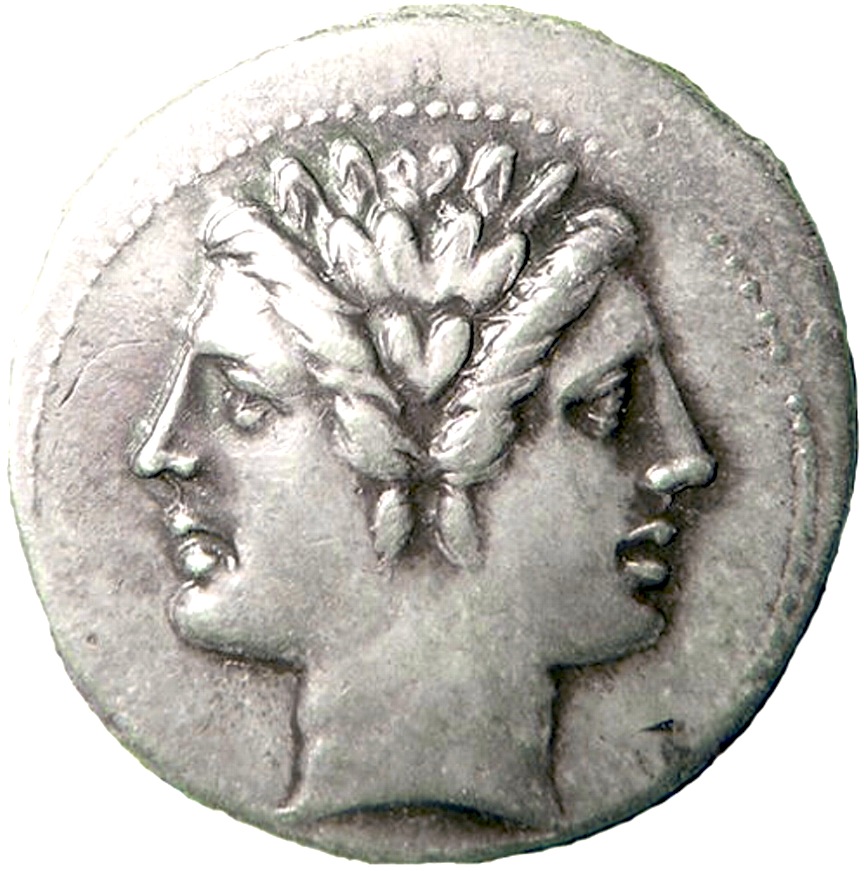
Janus – the god with two faces

The first day of January can be a time of regret and reflection mixed with hope and optimism for the future. This January ritual of looking forward and backward is fitting for the first day of a month named after Janus, the Roman god of beginnings and endings.

In ancient Roman religion and mythology, Janus was the god of gates and doorways, as well as beginnings, transitions, time, duality, passages, frames, and endings.

Janus held the key to the metaphorical doors or gateways as we transition from what was and into what is to come.

Janus had two faces so that he wouldn’t get a kink in his neck from constantly looking forward and backwards.

The ancient Roman poet Ovid wrote in his Fasti about Roman Festivals. These are ten things ancient Romans might have done on the first of January.

1. try to think good thoughts all day long
2. greet each other cheerfully, avoid gossip or negative speech
3. sprinkle saffron on the hearth, as incense
4. sacrifice to Janus before any other god in household shrine
5. join or watch a procession to the Capitoline hill, where
6. priest would sacrifice a heifer and
7. swear in the officials elected to serve in that year
8. do a bit of business
9. give honey, dates, coins to friends, family, patrons, clients
10. pray to the god Janus for peace  

It’d be neat as history teachers if we also could have two faces so that we can always be looking both forwards and backwards without getting a sore neck.

Aussies are still girt by monarchy

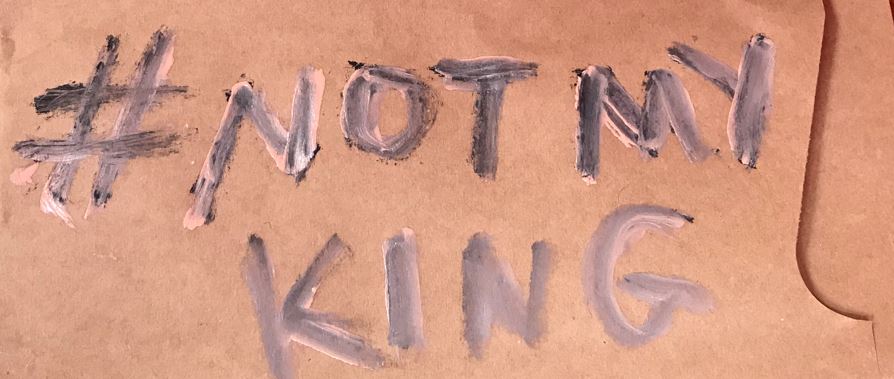
So, KCIII has finally turned up. King Charles III has finally undertaken the Australian leg of his victory lap of the Commonwealth. Surely it’s time for an Australian head of state to be not only one of us but also resident and present.

It’s been over two years since the then Prince Charles stepped into the top job. This all changes between 18th and 26th October 2024 and marks the first time Australians have had a royal audience with their own king.

After over ten years, four governors-general and two monarchs, a sitting Australian Head of State is headed Down Under!

Our absentee King’s 17,000km journey from the other side of the world will see Charles and his wife, Queen Camilla grace us with the presence of the British monarch on Australian soil for the first time as our Head of State (although the grace will be presented only in Sydney and Canberra).

Next Monday, King Charles III will be greeted in Canberra by the prime minister, but not a single state leader who have all declined their invitations, citing “other commitments” ranging from election campaigns to cabinet meetings.

It was less than two weeks ago that Queensland had its second King’s Birthday Public Holiday, even though KCIII’s actual birthday is 19 November. Queenslanders took the day off work; not in recognition of their hard work, but to recognise the British Monarch who will most likely be sleeping through our public holiday.

The King’s Birthday Public Holiday doesn’t remind us of anything good about our country. At worst, it tells us Australia’s head of state gets the job by inheritance.

You would’ve thought it would have been better if the British monarch had turned up for his own birthday weekend? I suppose though it would have been awkward: public holiday in Queensland only at this time of year (with WA a week before) and Queensland not even on the visiting schedule. Oops.

The lack of any public activity around the King’s Birthday Public Holiday shows also how the concept of monarchy is out-of-step with contemporary Australia. 

Since his birth as Prince Charles, KCIII has known he would take over the top job. Then one morning in 2022, Australians simply woke up to hear news from Britain that has changed our country for decades to come.

Australians did not choose King Charles III as our Head of State. It is a disgraceful fact that without constitutional change, the citizens of Australia will never be consulted on our head of state.

It’s time for an Australian to be our head of state and do the job full-time, rather than working from home at Windsor Castle where they can’t even be bothered Zooming into the Australian office at least once a week.

We are a unique multicultural country and we need someone who understands how to embody us, to be the guardian of our Constitution, to be a unifying symbol at home and someone we are proud to see representing us abroad. They should be elected on merit, not gifted the position by birthright. They should have the skills and work experience to do the job.

The person should be one of us, responsible and accountable to us, and unwaveringly loyal to us and only us.

We have our own identity as Australians. The Royals represent Britain, but cannot represent us or unite us as Australians. Australians believe in freedom and equal opportunity, not that some are born to rule over others.

We come from all walks of life, from all corners of the globe and this ancient land. Our shared commitment to our common future is what binds us together. Standing against this is the elevation of Charles III.

I’ve argued previously, there is no place for princes and kings in modern Australia. The public repudiation of previous Prime Minister Tony Abbott’s knights and dames decision showed that Australia has moved on from the old colonial way of thinking.

We can have respect and affection for Britain and its celebrity royals but still question why we do not have our own head of state. The royals are welcome to visit as representatives of Britain, but I look forward to when the British people and their royal family will welcome a visit by the first Australian head of state.

In the words of Sammy J:

So to our King, we say g’day and we praise his DNA, his ever-loyal subjects across the sea.

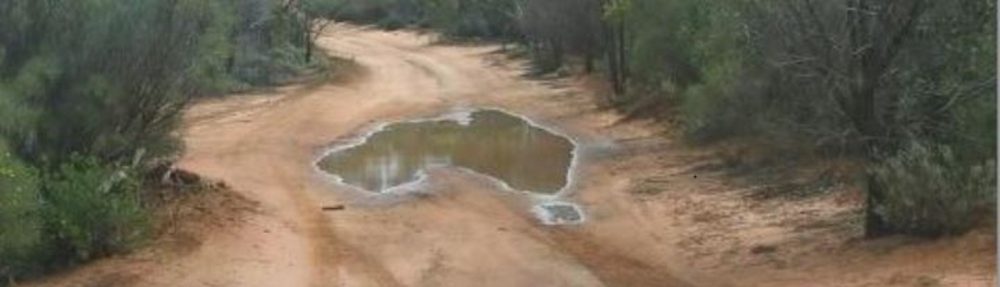
We might have golden soil and a bit of wealth for toil, but us Aussies are still girt by monarchy.

For us in Australia, royalty only ever visits us from somewhere else, from across the seas. It’s not something that lives with us. Royalty comes and royalty goes, but it is never a part of us.

Thanks Charles, but we’ve got it from here.

Toodle pip.