Palm Sunday, 1985 – 40 years on

Opposition Leader Peter Dutton’s nuclear energy solution to meet future energy needs appears to be struggling to get traction during the current federal election campaign. Although the success of the 1980s anti-nuclear movement appears to have faded and become part of the historical record, the spirit of the 1985 Palm Sunday protest march is still alive in Australia, writes history editor Dr Glenn Davies.

In 2025, Palm Sunday will occur on 13 April 2025. Palm Sunday, the Sunday before Easter, is a traditional day of protest for peace.

Australia has a long history to resisting uranium mining and nuclear development. During the 1980s, Palm Sundays in Australia were the occasions for enormous anti-nuclear rallies all across the country reaching a peak in 1985.

On 19 June 2024, Peter Dutton announced that “nuclear energy for Australia is an idea whose time has come.” At the same time he released

the seven locations, located at a power station that has closed or is scheduled to close, where we propose to build zero-emissions nuclear power plants.”

Nothing announced by Peter Dutton today changes the fact that nuclear energy is, according to reams of expert analysis, economically unfeasible in Australia. This is as true today as it was in the 1970s and 1980s.

The Palm Sunday peace march is an annual ecumenical event that draws people from many faith backgrounds to march for nonviolent approaches to contentious public policies. The event is based on the account of Jesus’ procession into Jerusalem which some see as an anti-imperial protest, a demonstration designed to mock the obscene pomp of the Roman empire. Palm Sunday is now considered an opportunity to join together to demonstrate for peace and social justice.

A major focus of activism in Australia during the anti-nuclear movement in the 1980s was the campaign against uranium mining, as Australia holds the world’s largest reserves of this mineral.

The Australian anti-nuclear movement emerged in the late 1970s in opposition to uranium mining, nuclear proliferation, the presence of U.S. bases and French atomic testing in the Pacific.

During the 1980s, Palm Sundays in Australia were the occasions for enormous anti-nuclear rallies all across the country.

The annual Palm Sunday rallies were organised by the People for Nuclear Disarmament (P.N.D.), beginning in 1982 and reaching a peak in 1985. On Palm Sunday in 1982, an estimated 100,000 Australians participated in anti-nuclear rallies in the nation’s biggest cities. These rallies grew year by year.

On Palm Sunday 1982, which fell on April 4th, more than 40 000 people marched in Melbourne to call for nuclear disarmament and highlight the multiple dangers associated with uranium mining and nuclear power. They were joined by a similar sized rally in Sydney. During the same week 5000 marched in Brisbane while numerous other protests were held across Australia.

1984 was the year of George Orwell’s dystopian future — though the 1980s were less about a surveillance society than nuclear fear. In 1984, Labor introduced the three-mine policy as a result of heavy pressure from anti-nuclear groups. This was also a time when many Australians were concerned that the secret defence bases at Pine Gap, North West Cape and Nurrungar, run jointly with the United States on Australian soil, were “high priority” nuclear targets.

An estimated 250,000 people took part in Palm Sunday peace marches in April 1984 and the Nuclear Disarmament Party gained seven per cent of the vote in the December 1984 election and won a Senate seat. In addition, the election of the Lange Labor Party Government in New Zealand in July 1984 resulted in New Zealand banning visits by ships that might be carrying nuclear weapons.

Australia did not follow the example of New Zealand and refused entry to any ship that carried nuclear weapons, which were also considered targets in a nuclear war. The refusal of New Zealand to permit a visit by the USS Buchanan in February 1985 threatened the future of the ANZUS alliance.

In 1985, more than 350,000 people marched across Australia in Palm Sunday anti-nuclear rallies demanding an end to Australia’s uranium mining and exports, abolishing nuclear weapons and creating a nuclear-free zone across the Pacific region. The biggest rally was in Sydney, where 170,000 people brought the city to a standstill.

In 1985, I was a first year James Cook University student living at University Hall. JCU students in Townsville supported the massive Palm Sunday rallies by our southern cousins in public protest by tagging on the end of the May Day (Labour Day) 1985 march along The Strand.

As we marched behind the Townsville unionists with their hats and placards remembering and publicly affirming the sacrifices their forebears had made – the mateship, the loyalty and the determination to build and protect the freedom and rights we now enjoy – we realised this march was about empowerment in a world where individuals still too often have little control over their own destiny when it comes to the workplace. And this was the lesson we young students learned on that day from our older working brothers as we also were desperately looking for more say in the safety of our world.

May is a beautiful time of the year in Townsville, with breezy, high-skied blue days. Marching along The Strand in Townsville we were proclaiming our concerns for ensuring a better and safer world for all our futures. It would be irresponsible for us not to chant:

2, 4, 6, 8. We don’t want to radiate”.

1, 2, 3, 4. We don’t want no nuclear war”.

By the late 1980s, the political, social and economic mood had swung firmly in favour of the anti-nuclear movement. Though it was clear that the three already functioning mines would not be shut down, the falling price of uranium, coupled with the 1986 Chernobyl disaster, ensured that there would not be a strong effort to broaden Australia’s nuclear program.

During the 1980s, there was a mushroom cloud shadow cast over Australia. The protests of the anti-nuclear movement was successful in linking the horror of nuclear war to the zeitgeist of the 1980s. The anti-nuclear movement served an important function in Australian politics where it visibly prevented any more pro-nuclear policies from being enacted by the Australian Government.

Peter Garrett is a former Labor minister for the environment, the lead singer of rock-band Midnight Oil, and has been a prominent nuclear disarmament activist since the 1980s. He recently stated in a Sydney Morning Herald Op-Ed:

Younger voters understandably won’t know that a generation their age once packed the Sidney Myer Music Bowl with Midnight Oil, INXS and other friends to “Stop the Drop”. They won’t remember our Nuclear Disarmament Party campaign, which won Senate seats in Western Australia and NSW in the ’80s. They can’t know what it was like to grow up during the Cold War era or live through horrific meltdowns at the Three Mile Island, Chernobyl and Fukushima nuclear power plants, which were also “completely safe” until the day that they weren’t. But generations Y and Z can still smell a rotten idea when they give it a good sniff.”

The use of nuclear energy as a solution to Australia’s future energy needs is still a hard sell.

Times have obviously changed since the 1970s, but significant political and economic barriers remain – and the problem of cost is still unsolved. This is compounded by apocalyptic visions of global destruction as part of our contemporary zeitgeist. It’s just that in its modern incarnation, the apocalypse has become more varied.

Gone is the single event; now we have a multiple-choice-question-sheet worth of ways to end our time on Earth. In the 2020s, the apocalypse continues to figure heavily in social life with constant references to wild weather, global financial crises, lone wolf terrorism, environmental collapse and zombie plagues.

And perhaps the greatest fear of all is that in this fracturing of fear may come complacency.

For Opposition Leader Peter Dutton he will continue to struggle to get traction, not only during the current federal election campaign but as long as the spirit of the 1985 Palm Sunday protest march lives.

Abbott’s Knightmare ‘Captain’s Pick’ – 10 years on

It was 10 years ago today then Prime Minister Tony Abbott used the Australia Day’s honour list to award Prince Philip with a resurrected Australian knighthood.

Editorials of newspapers across the country on 26 January 2015 slammed Prime Minister Abbott’s bizarre decision to hand Prince Philip a Knighthood, an imperial bauble, labelling the move “ludicrous” and “flabbergasting”.

On 27 March 2014, Prime Minister Tony Abbott, the former director of Australians for a Constitutional Monarchy, announced the return of imperial honours for Australians.

At the time, the PM said he believed this was: “… an important grace note in our national life.”

Tony Abbott’s ‘Captain’s Pick’ of Prince Philip for an Australian Knighthood on the day we should be celebrating Australia’s national identity resulted in the people of Australia being dragged by our elected leader into a cultural cringe so remarkable that it was almost beyond comprehension.

Abbott’s ‘Captain’s Pick’ of Prince Philip for a knighthood was to become a ‘Knightmare’ that has never been repeated since.

There’s no place for any Downton Abbey play acting in Australia. Aristocratic titles and imperial baubles have no place here. They belong over 9000 kms away on the other side of the world with the North and the Past. 

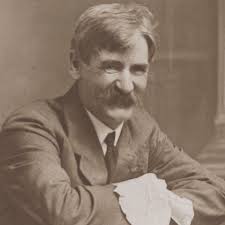
Henry Lawson wrote true in his 1887 ‘A Song of the Republic’:  

Henry Lawson

Sons of the South, awake! arise!
       Sons of the South, and do.
Banish from under your bonny skies
Those old-world errors and wrongs and lies.
Making a hell in a Paradise
       That belongs to your sons and you.

Sons of the South, make choice between
       (Sons of the South, choose true),
The Land of Morn and the Land of E’en,
The Old Dead Tree and the Young Tree Green,
The Land that belongs to the lord and the Queen,
  And the Land that belongs to you.

Sons of the South, your time will come —
       Sons of the South, ’tis near —
The “Signs of the Times”, in their language dumb,
Foretell it, and ominous whispers hum
Like sullen sounds of a distant drum,
       In the ominous atmosphere.

Sons of the South, aroused at last!
       Sons of the South are few!
But your ranks grow longer and deeper fast,
And ye shall swell to an army vast,
And free from the wrongs of the North and Past
       The land that belongs to you.

Thankfully, for the past 10 years, it has been Goodnight to knights and dames.

The Bushwackers – Republic Day

A Century of Compulsory Voting in Australia

Today, Australia clocks up a century of compulsory voting. Over this time compulsory voting has come to be seen as a community event; a common, civic enterprise – and one in which Australians are happy to participate, even if it is compulsory. We should celebrate how special compulsory voting has made our democracy, writes history editor Dr Glenn Davies.

I love election days – the pageantry, people, and smell of sausages. In Queensland, we will be having our next state election on 27 October 2024. On Election Day, I usually help run the P&C sausage sizzle in the mornings and hand out ‘how to vote’ cards in the afternoon. It’s a great chance to see the ebb and flow of your local community — and catch up with people you haven’t seen in ages. Election Day is a community event; a common, civic enterprise — and one in which most people are happy to participate.

Australia has been acknowledged in the past to be the world’s democratic laboratory. We pioneered the secret ballot (known elsewhere as the Australian ballot), universal adult suffrage, and popularly elected upper houses. We are also one of the few English-speaking nations to have mandatory voting, and people widely support it. Basically, Australia is one of the few nations in which voting is considered both a right and a duty – and the only Commonwealth Nation.

While compulsory voting was first advocated at the federal level by Alfred Deakin at the turn of the twentieth century, Australia’s first nine federal elections were held under voluntary voting. At the federal level, voluntary voting had produced between 55 per cent and 78 per cent turnout of voters.

It was in July 1910, that the then Labor Prime Minister, Andrew Fisher (a Queenslander) moved elections to Saturdays. This was of great assistance to Australian workers, who could then participate in elections. During the Federal parliament debate for the bill on compulsory enrolment in 1911, Senator George Pearce stated:

“Too often [voting] is looked upon merely as a privilege, because people throughout the world have had to fight for it — in some instances under distressing conditions … but I venture to say that in a country like Australia, where we recognise that every man and woman should have the right to vote, that right becomes more than a privilege — it becomes a duty.”

Soon after, in 1911, compulsory registration was introduced.

On 27 March 1912, Australia introduced compulsory enrolment and, in 1914, the uniformly disliked Queensland Premier Denham legislated compulsory voting in an attempt to gain middle-class non-unionised vote for the 1915 election. Apparently, the State Government was concerned that ALP shop stewards were more effective in “getting out the vote” and that compulsory voting would restore a level playing ground. Interestingly, the introduction of compulsory voting in Queensland in 1914 became the first place in the then British Empire to do so. However the result was not what Denham planned. The first compulsory poll saw an electoral swing to Labor all over Queensland, with the election of the second Queensland Labor Government, led by TJ Ryan, and the loss of Deham’s own seat.

The significant impetus for compulsory voting at federal elections appears to have been a decline in turnout from more than 71 per cent at the 1919 election to less than 60 per cent at the 1922 election.

On 24 July 1924, Tasmanian Senator Herbert Payne introduced the Commonwealth Electoral Bill 1924 as a private member’s bill to amend the Commonwealth Electoral Act 1918 to make voting compulsory in federal elections. Payne felt some action was required following the record low voter turnout (59.38 per cent) at the 1922 federal election. However, neither the government nor the opposition had compulsory voting on their platforms. Intriguingly, the law to make voting compulsory apparently passed through the Parliament in only 15 minutes and in neither house was a division required — therefore, no votes were recorded against the bill. This was only the third private member’s bill to be passed into law since 1901. Senator Payne explained the principle behind his Bill:

“The presumption is that our laws are enacted by a majority of the electors represented by a majority of the members in this Parliament.”

The impact of the new Bill was immediate, with turnout at the 1925 election rising to over 91%. After this, other states quickly followed: Victoria in 1926, New South Wales and Tasmania in 1928 and Western Australia in 1936. South Australia added compulsory voting for its House Assembly in 1942..

Since the federal election of 1925 voter turnout has never been below 90 per cent and, while the number of informal votes can vary, there is little evidence about what extent this represents acts of error, apathy or protest.

Strong and effective democracy requires a minimum degree of participation by all its citizens, not just those anxious to influence the system to get something out of it. The idea is not new. The Greek historian, Thucydides, recorded the Athenian leader Pericles as saying:

‘… we do not say that a man who takes no interest in politics is a man who minds his business: we say he has no business here at all.’

The decisions of government affect everyone and they are more likely to be made on behalf of everyone if everyone plays at least some role in selecting the members of Parliament.

Since 1924, participation in the voting process has become an accepted and entrenched activity in Australian society.

Compulsory enrolment and voting are the fundamental underpinnings of Australia’s democracy and Australians have readily accepted this with their enthusiastic participation in the electoral process. Participating in democracy should not be optional. Even if you despise politicians and the political process, turning out a couple of times every three or four years to vote for your local, state or national government is not burdensome for anyone. It forces even the most cynical individual to at least cast a fleeting glance at the political process and that is a desirable outcome.

The benefits of compulsory voting are stunning, including the consistently delivered voter turnout of more than 90%, among the best in the world and routinely 30% higher than voluntary systems. This translates into a politics that better targets the whole community. Perhaps the most important and surprising feature of compulsory voting is its popularity. Support for compulsory voting has been around 70% for half a century and has rarely dipped.

Australia has the oldest, and probably the most efficient, system of compulsory voting of any of the advanced democracies — and there is evidence of strong popular support for compulsory voting. Every opinion poll taken since 1943 has found that three in every four Australians support compulsory voting. This has always crossed party lines.

The first Australian Election Study, after the 1996 election, showed 74 per cent of respondents supported compulsory voting at federal elections; and the Australian Election Study after the 2004 election was still showing 74 per cent in support. A Morgan poll in 2005 showed 71 per cent support; and an Ipsos-Mackay Study, also in 2005, showed 74 per cent. Adelaide University’s Lisa Hill suggests:

‘…this is probably a function of the fact that their relationship to the state has normally been a friendly one.’

Australians have not looked upon the compulsion to vote as particularly objectionable or onerous. Most Australians regard voting not so much as a right but as a fairly undemanding civic duty. Voting is far less onerous than other compulsory civic duties — such as paying taxes, sending your children to school and jury duty. It is seen as a normal part of Australian political culture and has wide support in the Australian electorate.

Yes, it’s true, that compulsory voting forces people to engage with their democracy. But our democracy needs more occasions such as election day where we get together and engage in a shared activity. For the most part, this should not be as a result of compulsion. However, there is room for at least one occasion, held every few years, when all citizens are required to come together in a common, civic enterprise. The requirement that we turn up to vote meets that test.

It’s important to remember on this day, one hundred years later, that our robust and stable democracy is founded in our hard-won civic duty to participate in the voting process.

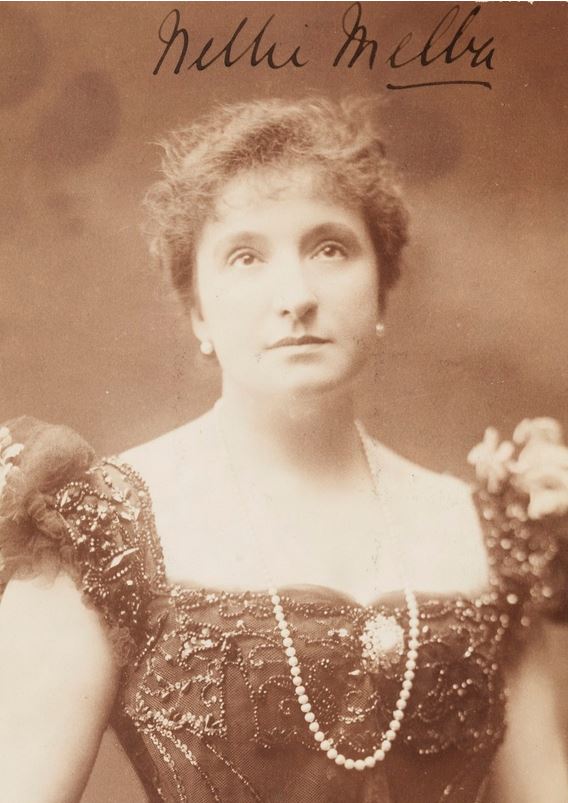
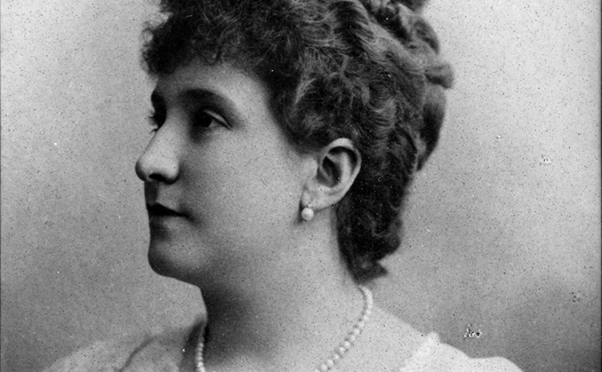
Dame Nellie Melba’s 1909 Back Blocks Tour (NSW & QLD) – Charters Towers performance

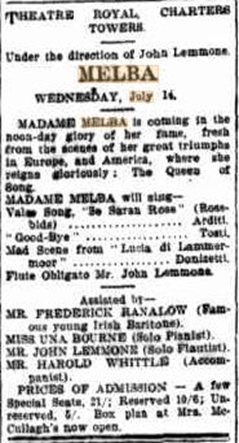
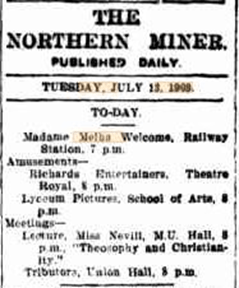
Today, 115 years ago, on 14 July 1909, Dame Nellie Melba performed at Charters Towers during her 1909 Back Blocks Tour (New South Wales and Queensland).

Australia has produced many singers of world renown, but none are more famous than the incomparable Dame Nellie Melba. She was unquestionably Australia’s most famous woman in her lifetime.

Melba dubbed her 1909 Australian tour her ‘sentimental tour’. It helped establish her reputation as an international star who also performed for her home crowd. Melba travelled by train across Australia, covering some 16,000 kilometres, performing in remote towns as well as cities.

The further she toured, the deeper seemed the adulation: there were banquets, speeches, even small crowds at wayside stations as Melba progressed with an entourage consisting of her manager, a maid and a valet, together with two baby grand pianos.

Dame Nellie Melba was regularly met by crowds at the railway stations and many of the towns she visited held banquets to show their support for Australia’s ‘Queen of Song’.

The public loved Melba and she equally loved their adoration.

The 1909 Back Blocks Tour began in Forbes on 8 June 1909 and travelled through Orange, Bathurst, Dubbo, Sydney, Maitland, Tamworth, Armidale, Glen Innes, Brisbane, Rockhampton, Mount Morgan, Rockhampton, and on 12 July 1909 performed in Townsville. The next stop for her tour was Charters Towers.

She would always arrive a full twenty-four hours before a performance, and to sustain the excitement give her concert without an interval.

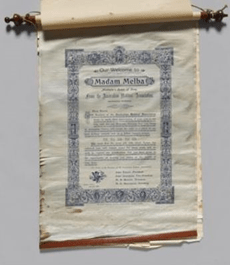
On her arrival in Charters Towers on 13 July 1909, Melba was presented with a Blue Silk Scroll by the Charters Towers branch of the Australian Natives’ Association (ANA). The silk scroll was hung on an ornate wooden rod and made by the Martin Smith Printers, Charters Towers.

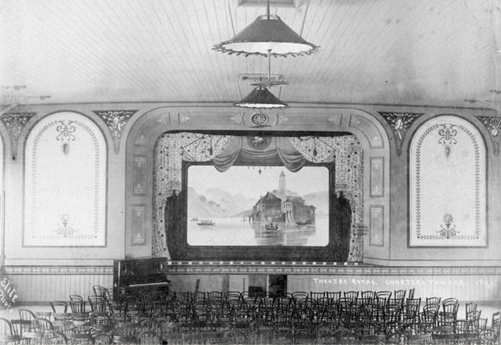
Dame Nellie Melba performed in the Theatre Royal at the corner of Church and Hodgkinson Streets. The Theatre Royal was the largest place of entertainment in Charters Towers and held upwards of 2000 people.

The main entrance to the theatre was via Hodgkinson Street frontage but there were two or three wide doorways opening onto Church Street as well. The dressing rooms were located at the northern end of the building under the stage area.

The 1909 Melba performance established a record for the theatre.

After the Charters Towers performance, the 1909 Back Blocks Tour went back to Townsville for a second performance, and then on to Bundaberg, Maryborough, Murwillumbah, Lismore, Casino, Brisbane, Toowoomba, Sydney, Cootamundra, Narandera, Wagga Wagga, and finishing in Albury, NSW on 6 September 1909.

This was a major event 115 years ago.

Palm Sunday is fundamentally a day of protest

Palm Sunday is a traditional day of protest for peace. During the 1980s, Palm Sundays in Australia were the occasion for enormous anti-nuclear rallies across the country.

THE PALM SUNDAY peace march is an annual ecumenical event that draws people from many faith backgrounds to march for nonviolent approaches to contentious public policies. The event has a rich history.

While the rallies have focused on different issues over time, shifting as different issues arise, the Palm Sunday peace march has been a constant over several decades.

The event is based on the account of Jesus’ procession into Jerusalem. Recorded in all four gospels, the narrative sees Jesus enter the city on a donkey, an action considered by many as a piece of anti-imperial political theatre, a demonstration designed to mock the obscene pomp of the Roman empire. Today, Christians commemorate the event with the movable feast Palm Sunday on the Sunday before Easter.

Australia has seen some large protest marches in the past. At the first Vietnam War moratorium protest in May 1970, 70,000 people marched in Melbourne and 20,000 in Sydney.

The annual Palm Sunday rallies were organised by the People for Nuclear Disarmament, beginning in 1982 and reaching a peak in 1985. On Palm Sunday in 1982, an estimated 100,000 Australians participated in anti-nuclear rallies in the nation’s biggest cities. These rallies grew year by year.

1984 was the year of George Orwell’s dystopian future — though the 1980s was less about a surveillance society than nuclear fear. In 1984, Labor introduced the three-mine policy as a result of heavy pressure from anti-nuclear groups. This was also a time when many Australians were concerned that the secret defence bases at Pine Gap, North West Cape and Nurrungar, run jointly with the United States on Australian soil, were “high priority” nuclear targets

An estimated 250,000 people took part in Palm Sunday peace marches in April 1984 and the Nuclear Disarmament Party gained 7 per cent of the vote in the December 1984 election and won a Senate seat. In addition, the election of the Lange Labor Party Government in New Zealand in July 1984 resulted in New Zealand banning visits by ships that might be carrying nuclear weapons.

Australia did not follow the example of New Zealand and refused entry to any ship that carried nuclear weapons, which were also considered targets in a nuclear war. The refusal of New Zealand to permit a visit by the USS Buchanan in February 1985 threatened the future of the ANZUS alliance.

In 1985, more than 350,000 people marched across Australia in Palm Sunday anti-nuclear rallies demanding an end to Australia’s uranium mining and exports, abolishing nuclear weapons and creating a nuclear-free zone across the Pacific region. The biggest rally was in Sydney, where 170,000 people brought the city to a standstill.

In May 2000, there were around 250,000 people who walked across Sydney Harbour Bridge in support of reconciliation.

On 15 February 2003, there were protest marches all around Australia in capital cities, many major cities and towns demonstrating against involvement in the Iraq war. The estimate for participation around Australia was just over 1,000,000 people.

350,000 students and workers undertook a climate strike in 2021 in over 115 Australian cities and towns, and more recently the sustained weekly mass protests in support of the Palestinian people.

During the 1950s and 1960s, the United States and the USSR accused each other of wanting to dominate the world. Nuclear weapons were used as a form of security. The more the U.S. built, the more the USSR built. The destructiveness of nuclear weapons is immense. The policy of Mutually Assured Destruction (MAD) was that the more a country had, the less likely it was to be attacked. Many Australians did not believe in the policy of MAD.

The apocalypse figured heavily in 1980s social life.

The song “London Calling” from the 1979 album of the same name by UK punk band The Clash is an apocalyptic, politically charged rant that reflected the concern about world events with reference to “a nuclear error” and the incident at Three Mile Island, which occurred earlier in 1979.

From 1980 to 1988, the U.S. President was Ronald Reagan – a better actor in office than he ever was on screen – who co-opted the language of science-fiction for his proposed anti-ballistic system, the Strategic Defense Initiative. This proposal was known as “Star Wars” — a machine that would protect humanity from itself.

The popular view was that the stumbling hand of Ronald Reagan perpetually hovered over the nuclear kill switch. During the early and mid-1980s, many Americans rallied to the Reagan administration’s policies, particularly increased spending. During this time, popular pro-nuclear, pro-Reagan films existed such as Red Dawn where on a peaceful morning in mid-western America, through the windows of a high-school classroom, students see Soviet paratroopers land on their football field starting the invasion of the United States.

Red Dawn was released in the same year Arnold Schwarzenegger frightened everyone with the nightmare vision of an apocalyptic future after the world had been destroyed in The Terminator. Science fiction gives insights into the sources, dangers and dimensions of the nuclear menace. In films dealing with post-nuclear scenarios, humankind must survive if there is to be any story at all.

At the same time that Americans flocked to the Reagan platform, more Americans watched the city of Lawrence, Kansas suffer the effects of a fictitious nuclear war in The Day After. The controversial 1983 movie portrays the grim reality of what a nuclear war looks like and its aftermath of social chaos and economic collapse. During the Cold War, it was theorised that Lawrence, Kansas would be one of the few cities completely unaffected by nuclear war as it is near the exact geographic centre of the United States.

The Day After was a dramatisation of the effects of a hypothetical nuclear attack on the United States and was one of the biggest media events of the 1980s. The Day After aired on U.S. TV on Sunday, 20 November 1983 on the ABC television network and was watched by an estimated half the adult population, nearly 100 million, the largest audience for a made-for-TV movie to that time and making the film one of the most successful television broadcasts.

The airing of The Day After on U.S. TV was a defining moment in the Cold War in that it took human extinction to the individual level. The Cold War attitude towards nuclear proliferation stopped cold in its tracks. The people of the world could now visualise what a nuclear attack would look and feel like — and they didn’t like it.

The song ’99 Luftballoons’ is a Cold War-era protest song by the German singer Nena. It reached number one in West Germany in 1983 and the original German version peaked at number two on the American Billboard in 1984.

Then, starting on 28 February 1984, Nena topped the UK Singles Chart for three weeks. The song tells a story of 99 balloons floating into the air over the Berlin Wall to the Soviet sector, triggering an apocalyptic overreaction by military forces. It came during a period of escalating rhetoric and strategic manoeuvring between the United States and the Soviet Union in the Cold War.

In particular, its international success followed the United States deployment of Pershing II missiles in West Germany in January 1984 (in response to the Soviet deployment of new SS-20 nuclear missiles), which prompted protests across Western Europe.

Then in May 1984, Frankie Goes to Hollywood released ‘Two Tribes’. It was a phenomenal success in the UK, although in 1986 it all became real with the Chernobyl nuclear power plant explosion.

A major focus of activism in Australia during the anti-nuclear movement in the 1980s was the campaign against uranium mining, as Australia holds the world’s largest reserves of this mineral.

The Australian anti-nuclear movement emerged in the late 1970s in opposition to uranium mining, nuclear proliferation, the presence of U.S. bases and French atomic testing in the Pacific.

In 1982, Labor voted to revise its no-mine policy, instead choosing to advocate a one-mine policy. Two years later, Labor retreated further, acting in support of a three-mine policy — the three mines that were already active in Australia. This meant that although Labor would not endorse any effort to build new uranium mines, they would not act to shut down the mines already in operation. The three mines policy was in place between 1984 and 1996. However, the mining industry felt that this unnecessarily restricted uranium mining.

During the 1980s, there was a mushroom cloud shadow cast over Australia. The anti-nuclear protest movement was successful in linking the horror of nuclear war to the zeitgeist of the 1980s. The anti-nuclear movement served an important function in Australian politics, where it visibly prevented any more pro-nuclear policies from being enacted by the Australian government.

By the late 1980s, the political, social and economic mood had swung firmly in the favour of the anti-nuclear movement. Though it was clear that the three already functioning mines would not be shut down, the falling price of uranium, coupled with the 1986 Chernobyl disaster, ensured that there would not be a strong effort to broaden Australia’s nuclear program.

Although the success of the anti-nuclear movement appears to have faded and become part of the historical record, the spirit of the 1985 Palm Sunday protest march is still alive in Australia. Apocalyptic visions of global destruction continue to be part of our contemporary zeitgeist. In its modern incarnation, the apocalypse has become more varied.

Gone is the single event; now we have a multiple-choice question sheet worth of ways to end our time on earth. In the 2020s, the apocalypse continues to figure heavily in social life with constant references to wild weather, global financial crises, lone wolf terrorism, environmental collapse and zombie plagues.

And perhaps the greatest fear of all is that in this fracturing of fear may come complacency.